Small parts. Precise performance.
Precision sealing parts engineered for your operating conditions.
Four parts. One standard.
Membranes, O-rings, gaskets and flexures differ in shape, but share one standard for materials, process and inspection.
- MEMBRANE · CMP head membranes
- O-RING · HAPEX · industrial O-rings
- GASKET / PACKING · Equipment & piping seals
- FLEXURE · Precision equipment parts
Concept drawing · not actual product geometry
Four product families.
Application-led engineering.
Geometry, material, operating conditions and inspection requirements, reviewed for each part.
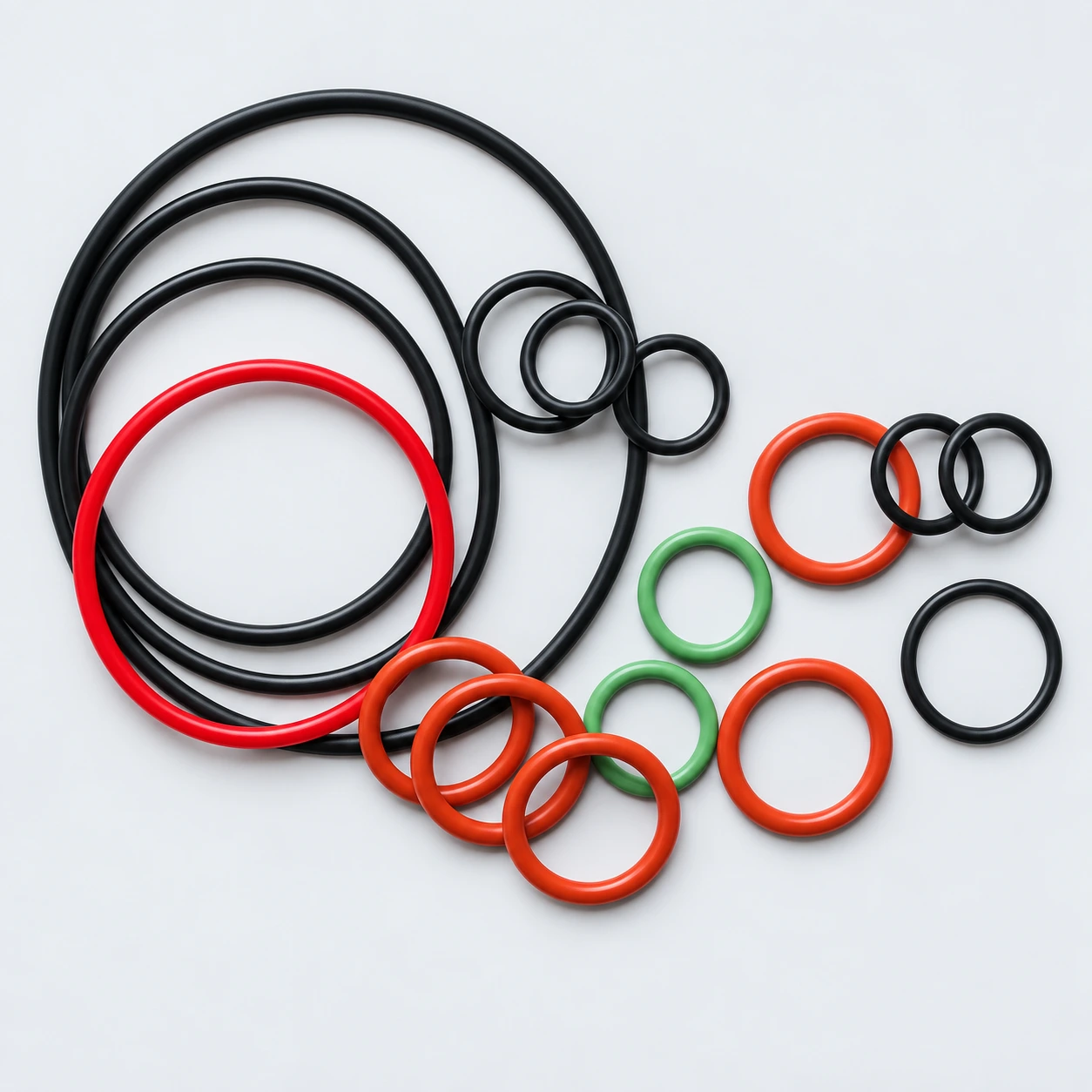
O-RING
Industrial sealing
Elastomer seals for joints and interfaces in industrial equipment. Production is reviewed against your drawings and operating conditions.
- Applications
- Semiconductors, automotive, chemical and general industry
- Review points
- Chemical compatibility, extractables and compression conditions
 HAPCO ORIGINAL MATERIAL BRAND
HAPCO materials for
heat and chemical resistance.
HAPEX is HAPCO’s own perfluoroelastomer brand, compounded and produced in-house. We review the compound and O-ring specification for your process.
Discuss HAPEX O-ringsHAPEX application guide
Application processes and maximum temperatures from the product guide.
| Grade | Max. Temp. | Processes | Key characteristics |
|---|---|---|---|
| HAPEX-300A | 300°C | HDPCVD · PECVD · SACVD | Erosion and particle control in oxygen / fluorine plasma environments |
| HAPEX-300B | 300°C | HDPCVD · PECVD | Particle control in NF₃ plasma environments |
| HAPEX-300C | 300°C | LPCVD · RTP | Outgassing and compression set resistance |
| HAPEX-275W | 275°C | Wet Process | Chemical and heat resistance in chemical-contact environments |
| HAPEX-320H | 320°C | Oxidation · Diffusion · MCVD · ALD · LPCVD | High-temperature properties and compression set characteristics |
| HAPEX-230C | 230°C | CVD · RPCVD · APCVD · DCVD | Property retention in chemical-contact environments |
Based on the HAPCO HAPEX O-RING product guide. Temperatures are not guaranteed continuous-use limits for every operating condition. Confirm suitability against fluid, pressure, temperature and inspection requirements.
Press it. Elastomers come back.
Drag the top plate down to squeeze the O-ring. Let go and it recovers its shape. That rebound is what seals the gap.
Typical static-seal squeeze (reference) 15–30%
- COMPRESSION
- 0
- REACTION
- 0
- CONTACT WIDTH
- 0
Curve and values are illustrative. Real values depend on compound, hardness and gland design.

Rubber material characteristics
Explore general material characteristics before discussing your application.
NRNatural rubber
- Reference temperature range
- −40 to 60°C
- Characteristics
- Mechanical properties; consider sunlight, ozone and heat aging.
- Typical applications
- Tires, hoses, belts and air springs
NBRNitrile rubber
- Reference temperature range
- −40 to 110°C
- Characteristics
- Oil and wear resistance, impact absorption.
- Typical applications
- Fluid power, automotive, marine fuel and construction
HNBRHydrogenated nitrile
- Reference temperature range
- −32 to 135°C
- Characteristics
- Weather and ozone resistance, strength and abrasion resistance.
- Typical applications
- Fuel, refrigerant and oil systems
CRChloroprene rubber
- Reference temperature range
- −45 to 120°C
- Characteristics
- Weather, ozone, heat and flame resistance.
- Typical applications
- Automotive, rail and refrigerant systems
EPDMEthylene propylene rubber
- Reference temperature range
- −40 to 140°C
- Characteristics
- Aging and ozone resistance; suitable for selected polar fluids.
- Typical applications
- Steam, hot water, brake and cooling systems
ACM / ANMAcrylic rubber
- Reference temperature range
- −10 to 160°C
- Characteristics
- High-temperature oil resistance.
- Typical applications
- Transmission and power steering
QSilicone rubber
- Reference temperature range
- −95 to 260°C
- Characteristics
- Heat and cold resistance; review tear, tensile and abrasion requirements.
- Typical applications
- Static seals and application-specific compounds
FKM / FPMFluorocarbon rubber
- Reference temperature range
- −45 to 250°C
- Characteristics
- Heat, chemical and oil resistance.
- Typical applications
- Fuel, high-temperature and high-vacuum systems
FFKM / FFPMPerfluoroelastomer
- Reference temperature range
- −35 to 340°C
- Characteristics
- Heat, chemical and plasma resistance.
- Typical applications
- High-temperature and chemical seals
General reference based on the supplied material guide, not guaranteed HAPCO product specifications. Suitability varies by compound, fluid, pressure and exposure conditions.
Uniform pressure.
The role of the membrane.
A passive part that transfers air pressure between the CMP head and the wafer, supporting precision surface processing.
Conceptual illustration only. Not a dimensional or engineering drawing.